
Evolutionary Applications · 2021
Epigenomic modifications induced by hatchery rearing persist in germ line cells of adult salmon after their oceanic migration
In coho salmon, methylation differences associated with the early rearing environment are found in the germ cells of adults after their ocean migration. This persistence raises questions about the possible long-term effects of rearing and a possible transmission across generations.
- The question
- Are epigenetic signatures of early rearing still present in the germ cells of adults?
- The approach
- Whole-genome bisulfite sequencing of the milt of adult salmon of wild or hatchery origin, in two rivers.
- What the article brings
- Differentially methylated regions are kept until adults return to spawn.
- The limits
- The persistence of these marks in germ cells does not, on its own, demonstrate their transmission to offspring.
Figures from the article
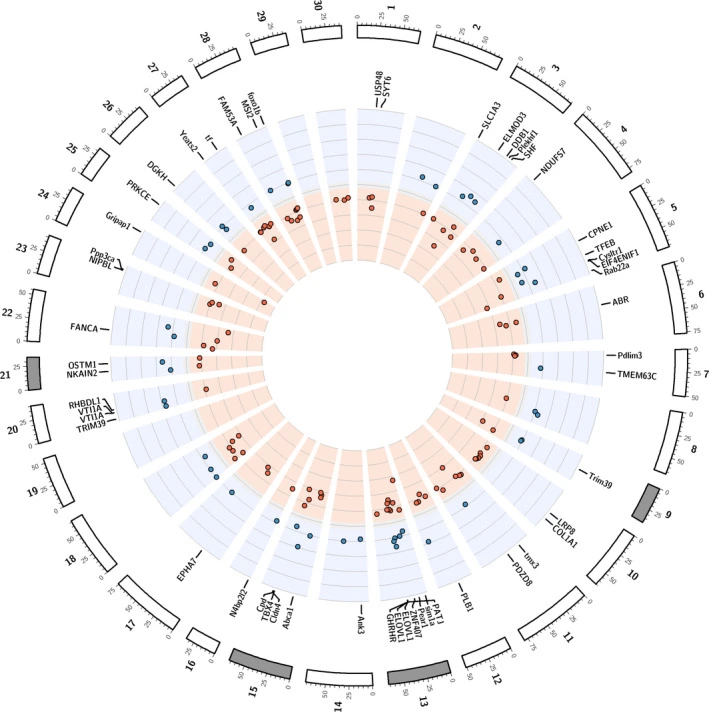 Figure (opens in a new tab)
Let’s discuss your project
Your question. Our next starting point.
A project in biodiversity, genomics or bioinformatics? Describe your needs to receive a proposal, or book a first conversation with our scientific team.
Or write to us: info@ldgenx.fr