Genetic diversity of trout in the Orb river
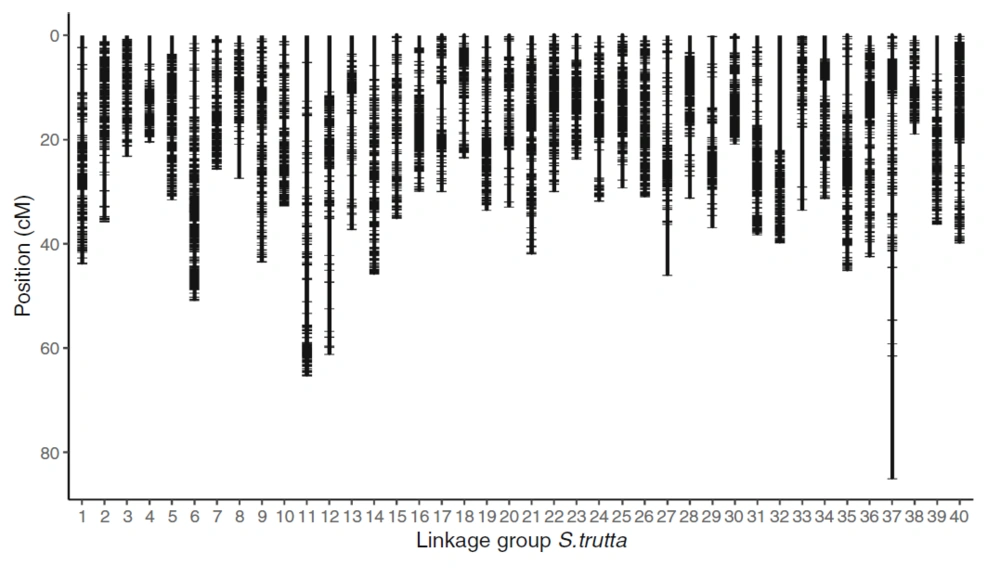
The use of 196K SNP markers allowed us to estimate the genetic diversity and the inbreeding index of the wild (La Mare, Gravezon and Orb) and domestic (Atlantic and Mediterranean) brown trout (Salmo trutta) populations of the Orb basin.
We were able to show that the wild Gravezon population had lower genetic diversity and a high inbreeding rate compared with the wild La Mare and Orb populations (Table 1; Leitwein et al. 2016 (opens in a new tab)).
Furthermore, we demonstrated that the Mediterranean domestic strain had very low diversity and was highly inbred, in contrast to the Atlantic domestic strain, which had higher genetic diversity.
These results demonstrate that the Mediterranean domestic strain requires specific management to increase its genetic diversity.
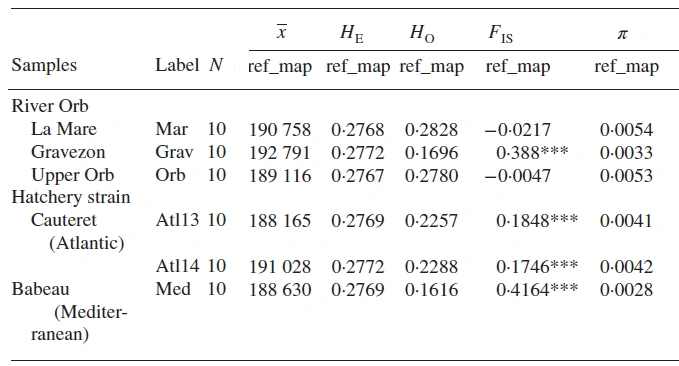 Figure (opens in a new tab)
Genomic landscape of domestic ancestry in brook trout
Brook trout (Salvelinus fontinalis) is stocked for recreational fishing in Québec. These introductions have produced admixture between wild populations and a domestic strain, investigated by Leitwein et al. (2019) (opens in a new tab).
The published article analyses about 33,000 mapped SNPs in 611 individuals from 24 supplemented populations. Ancestry tracts distinguish early- and later-generation hybrids and estimate domestic introgression along the genome. Regions favouring or disfavouring this ancestry vary with the scale studied and the recombination context (Figure 1; Leitwein et al. 2019 (opens in a new tab)).
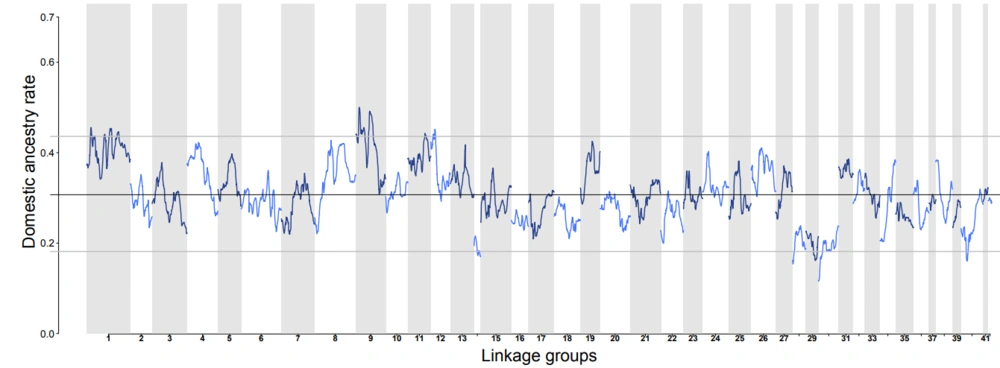 Figure (opens in a new tab)
Effects of introducing domestic alleles
In brook trout, some patterns are consistent with a favourable effect from masking potentially deleterious recessive alleles in wild populations. The 2019 and 2021 results nevertheless show effects that vary among populations and genomic regions; they do not establish that every introduction of domestic alleles is beneficial.
Beyond these potential beneficial effects, however, purging of domestic alleles was also observed. These mechanisms reflect negative effects of introducing domestic alleles into some regions of the genome (Leitwein et al. 2019 (opens in a new tab) and 2021 (opens in a new tab)).
For example, on linkage group 26 (Figure 2), an excess of domestic ancestry associated with potentially deleterious recessive alleles can be observed.
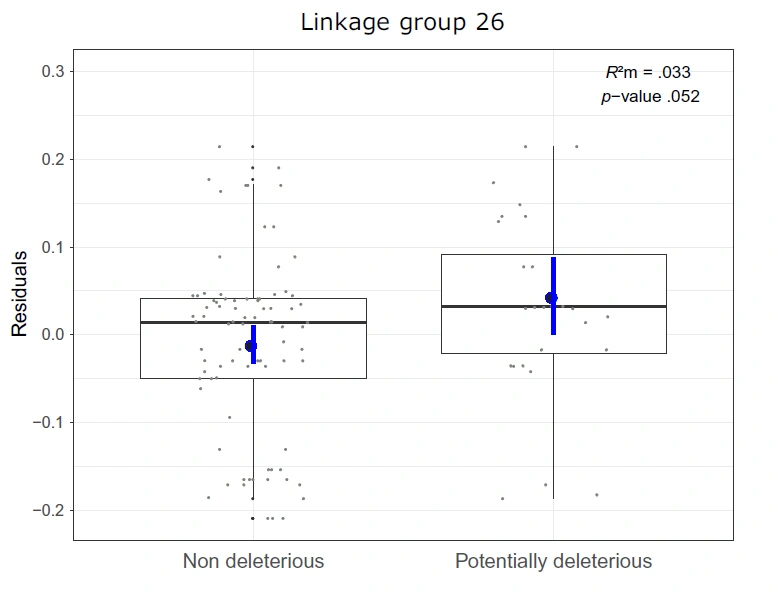 Figure (opens in a new tab)