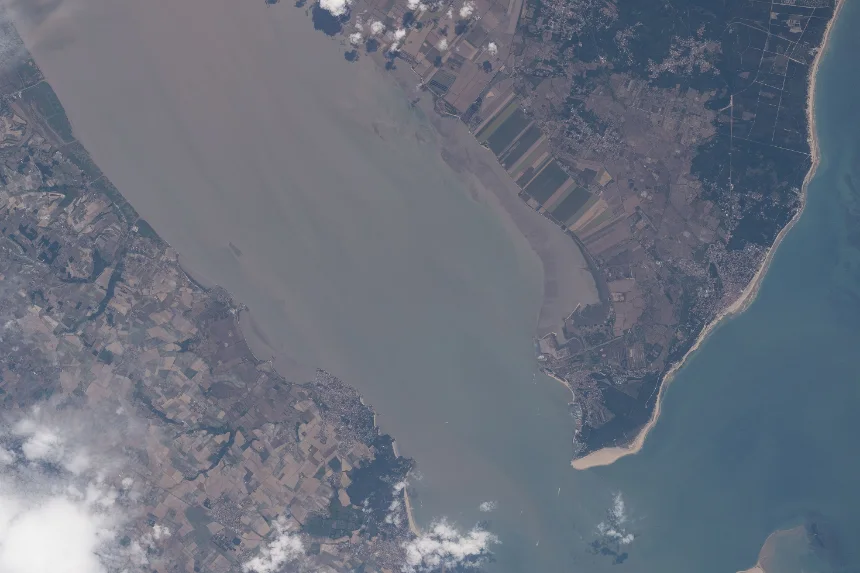
Sector · Mardyck basin
12 species
- Sampling
- 25 November 2025
- Access
- Support vessel
- Salinity (PSU)
- 32
- Turbidity (NTU)
- —
- Mean filtered volume (L)
- 13.7
Environmental DNA
A fish survey for the Artois-Picardie Water Agency.
Environmental DNA · Case study
Reading the biodiversity of ports and estuaries.
A fish survey for the Artois-Picardie Water Agency.
A fish survey for the Artois-Picardie Water Agency. Client: Artois-Picardie Water Agency. Carried out by: Qualyse, LDgenX and Prelevmar consortium.
How can knowledge of fish communities be improved, and how does eDNA compare with conventional data collection methods?
Median richness close between ports and estuaries, except for the Slack, but a different distribution of species; assemblages consistent with the expected ecological guilds. The study feeds the discussion on eDNA for monitoring aquatic environments.
The published results
The Artois-Picardie Water Agency published the article, the final report and the restitution presentation of the study, in French. The information below restates their content, with their figures.
 Figure (opens in a new tab)
Frequent in several port sectors:
Six species detected with Teleo have never been reported in the area (Asterias amurensis, Macrobrachium nipponense, Oncorhynchus keta, Oncorhynchus tshawytscha, Sardinops sagax, Squalius lepidus), nor has one species detected with Elas02 (Atherina hepsetus). The report attributes them to assignment errors, close sequences, contamination or DNA transport; doubtful taxa are excluded from the guild analysis.
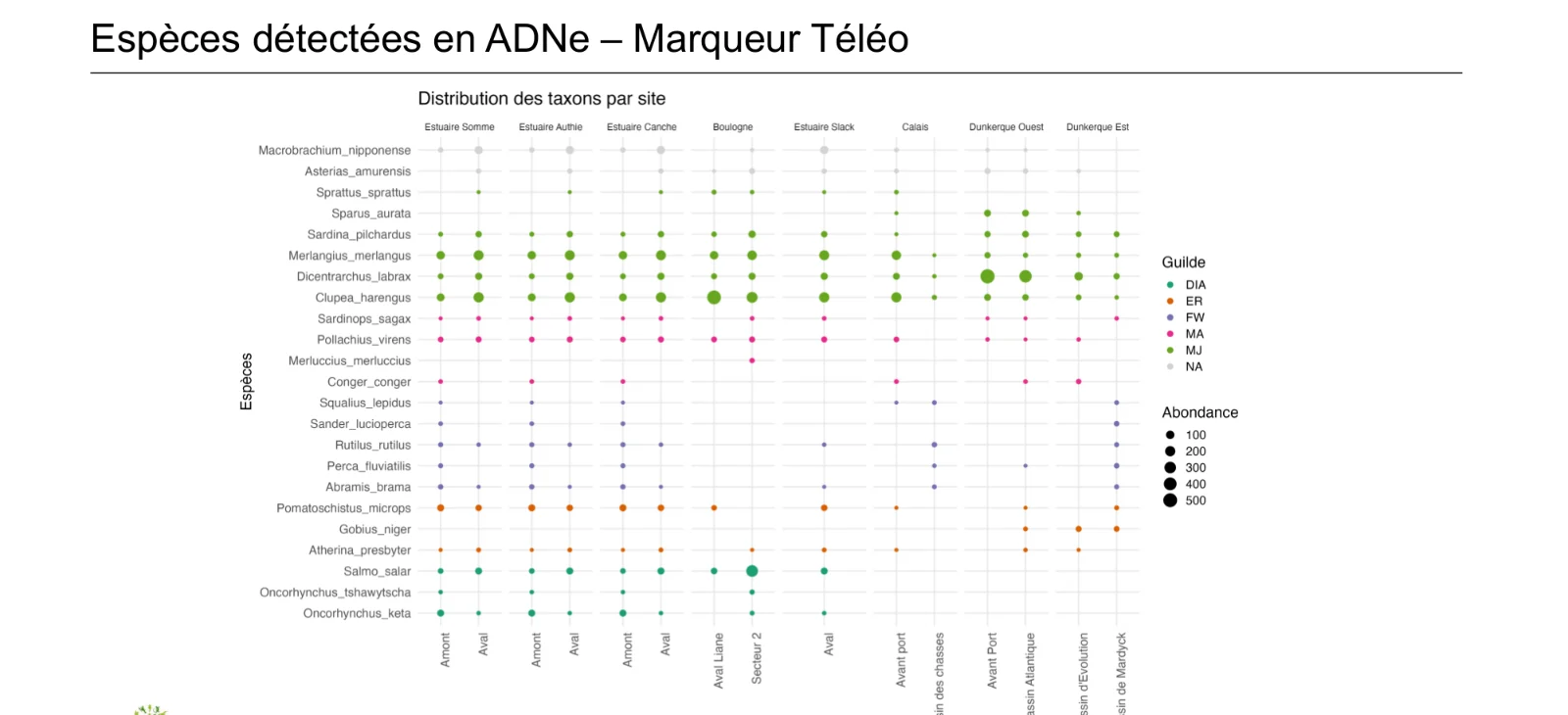 Figure (opens in a new tab)
A contrast between the Mardyck basin, marked by the unusual detection of freshwater species (bream, roach, perch, zander), and the Évolution basin, dominated by coastal marine and estuarine species. These freshwater detections must be interpreted with caution: continental water inputs, indirect DNA transfer or contamination.
12 species
10 species
Species totals per site vary with the marker and filters applied between the presentation and the report. The richness shown here is that of each sector in the final report; validated data tables are needed for an interactive dashboard.
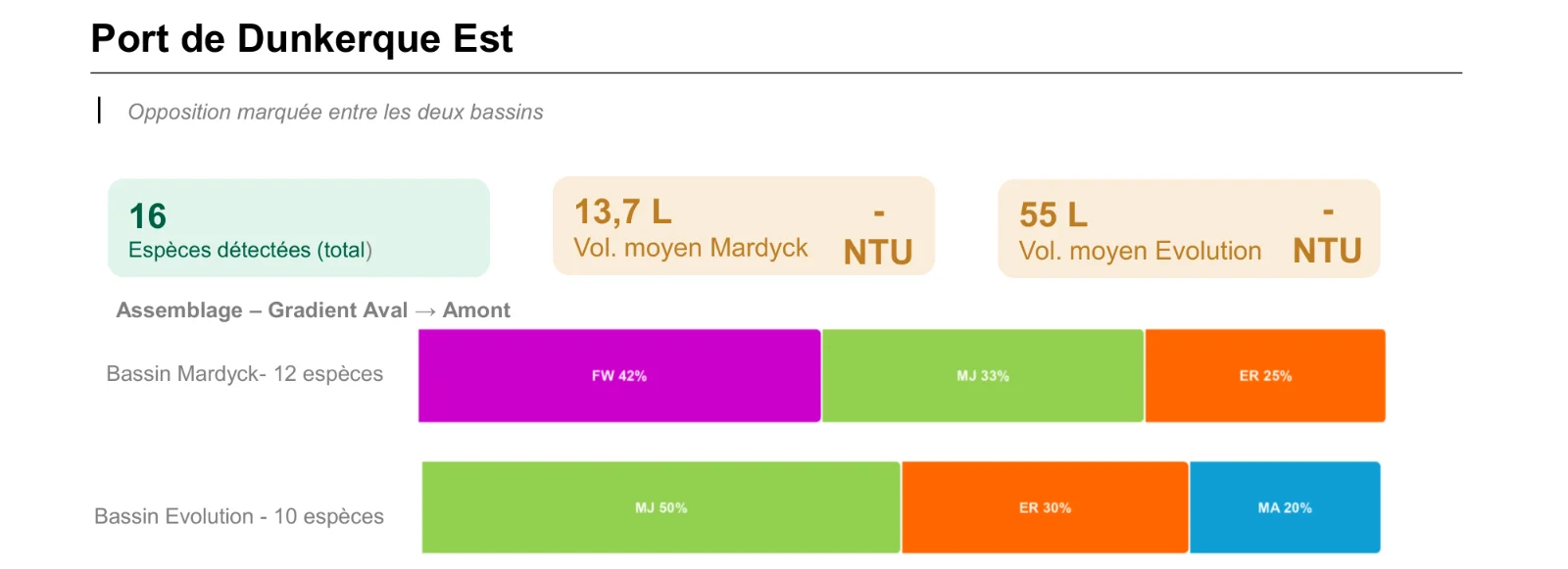 Figure (opens in a new tab)
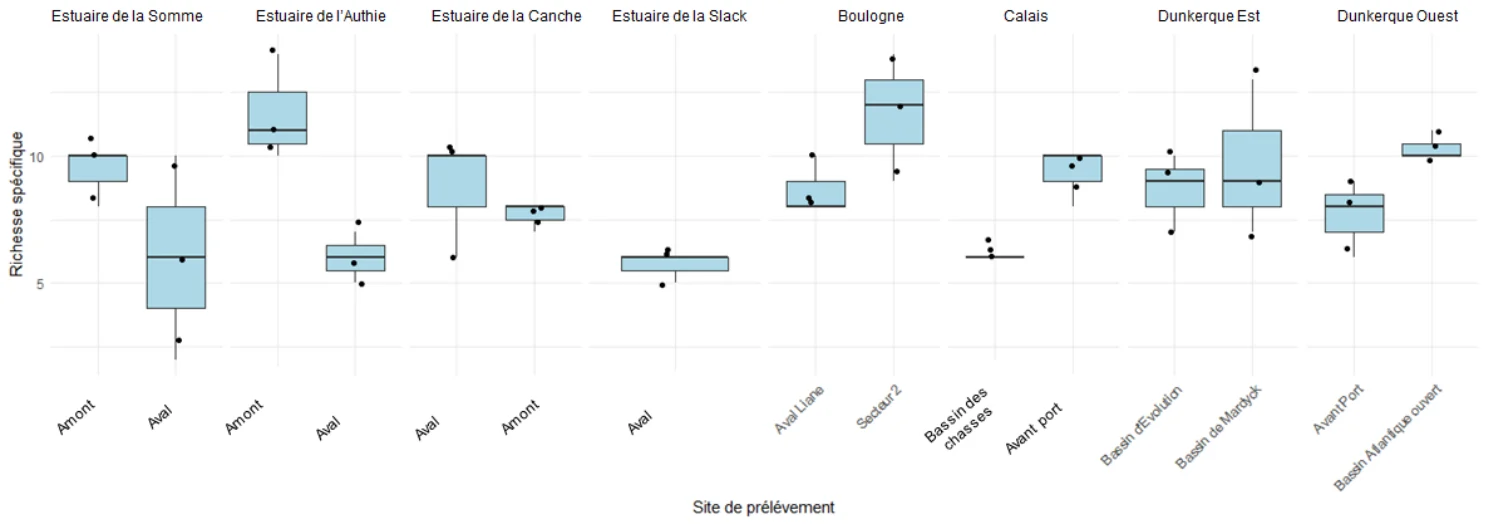 Figure (opens in a new tab)
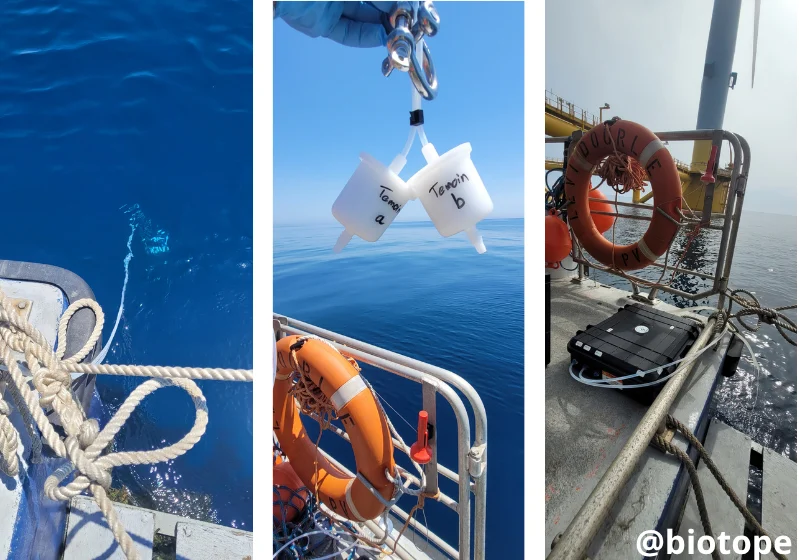
From 25 November to 3 December 2025, three replicates filtered simultaneously at each station with three pumps in parallel, on sterile 0.45 µm Waterra capsules, then preserved in Longmire buffer. Filtered volumes ranged from 2 to 90 L, averaging about 29 L, because of high turbidity.
DNA extraction (ZymoBIOMICS kit), amplification of two markers: Teleo (teleost 12S gene) and Elas02 (elasmobranchs), five PCR replicates per sample, Ion Torrent S5 Prime sequencing. The sequenced negative controls contain no sequences.
Demultiplexing with scripts developed by LDgenX, SAMBA v4.0 pipeline (QIIME2, DADA2), taxonomic assignment against the MIDORI2 database. Of 356 ASVs detected, 96 were assigned to a fish species: 23 taxa with Teleo, 13 with Elas02.
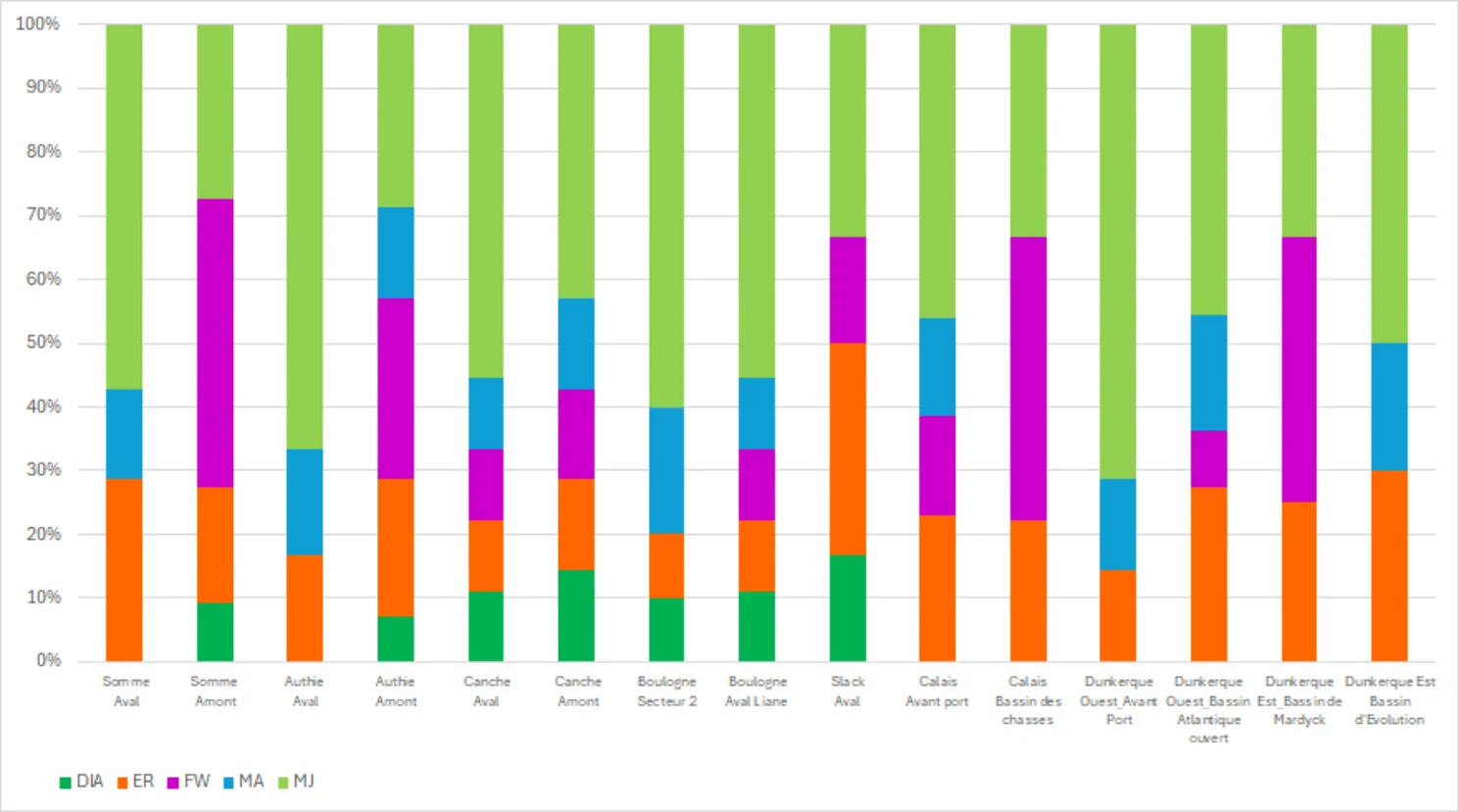 Figure (opens in a new tab)
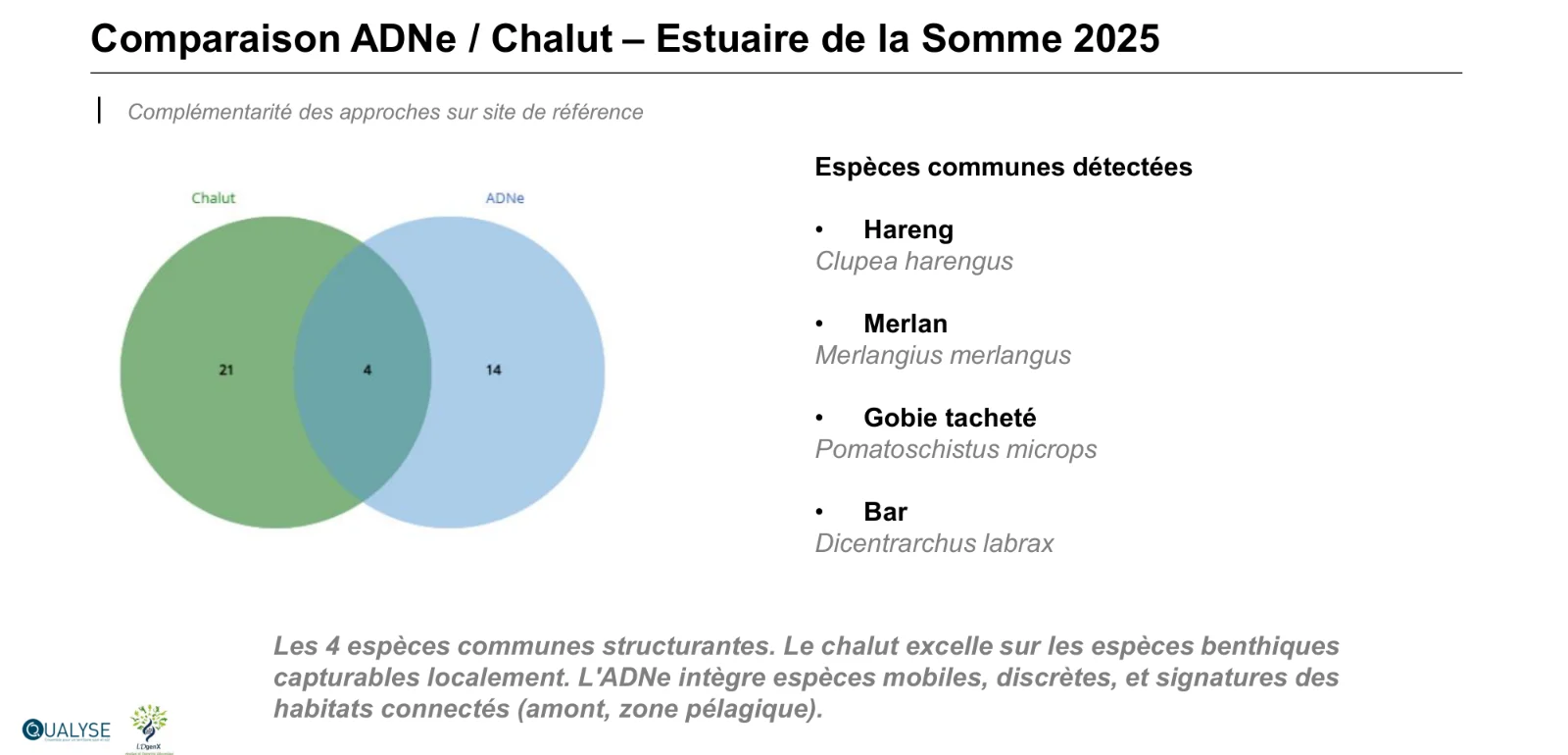 Figure (opens in a new tab)
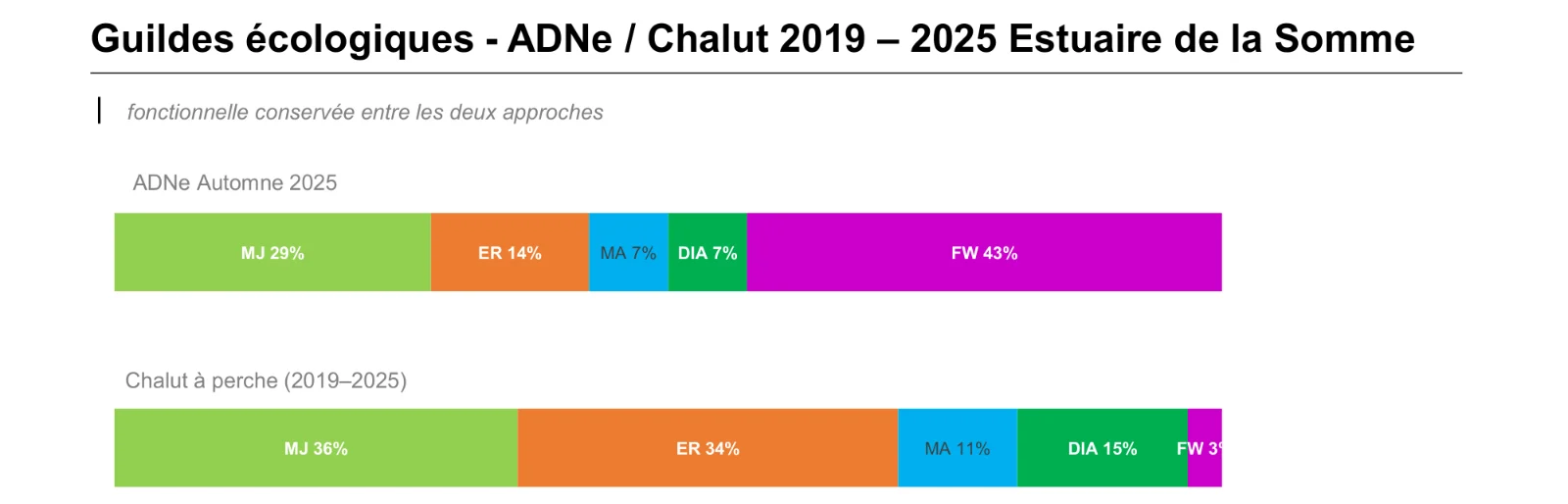 Figure (opens in a new tab)
Turbidity affects detection: detected richness tends to decrease as turbidity increases (R² = 0.32; p = 0.026).
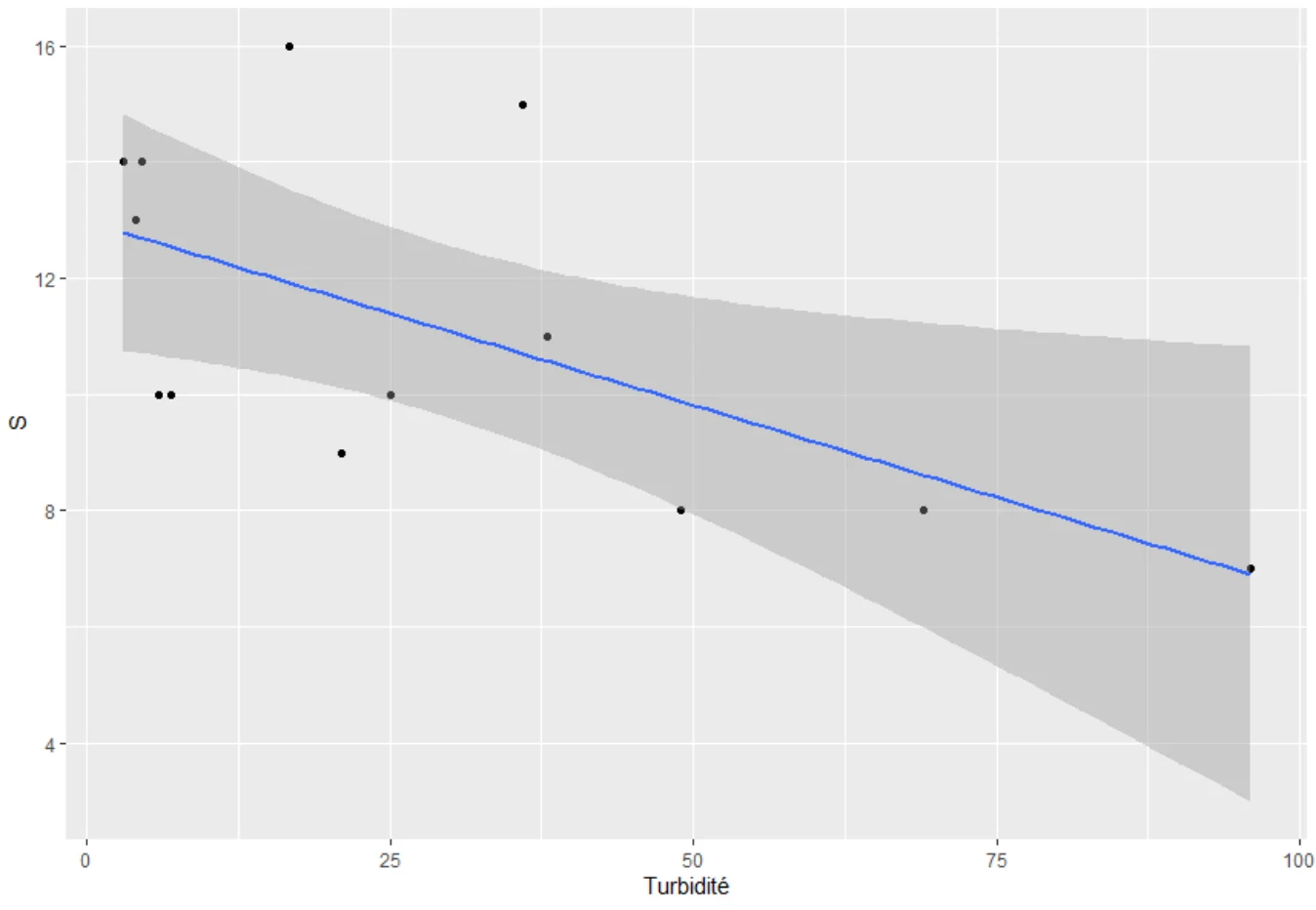 Figure (opens in a new tab)
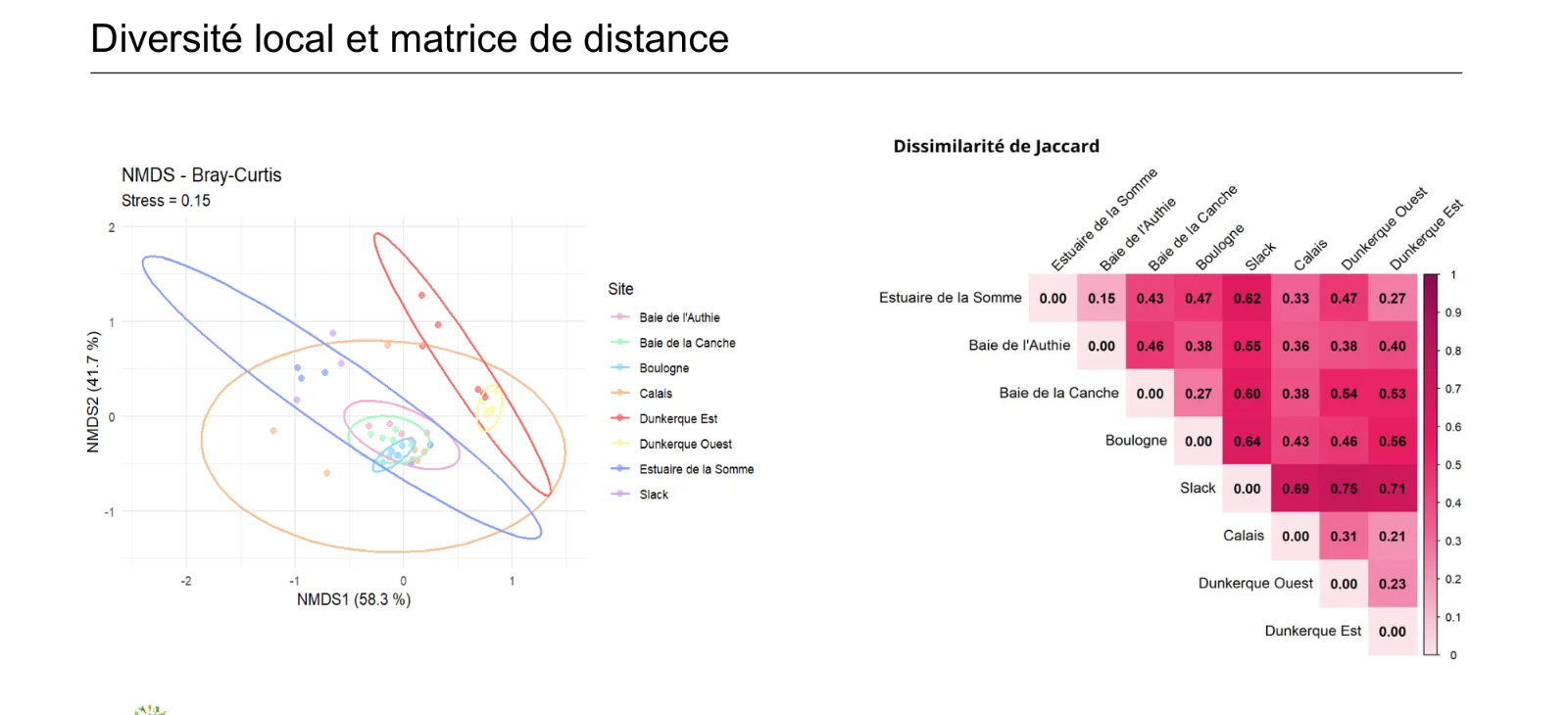 Figure (opens in a new tab)
Figures: final report and restitution presentation by the Qualyse, LDgenX and Prelevmar consortium for the Artois-Picardie Water Agency (2026), in French.
The related service
Traces of life become a source of knowledge.
Explore this serviceThe other studies
Let’s discuss your project
A project in biodiversity, genomics or bioinformatics? Describe your needs to receive a proposal, or book a first conversation with our scientific team.
Or write to us: info@ldgenx.fr